
Introduction
Every fashion brand, boutique owner, or garment exporter knows this truth from experience: your fabric is your foundation. No amount of beautiful design, clever marketing, or smart pricing can compensate for fabric that disappoints, whether it pills after the first wash, bleeds colour under studio lighting, or arrives three weeks late before your season launch.
Choosing the right fabric manufacturer isn’t just a procurement decision. It’s a strategic one. The partner you pick will shape your quality, your costs, your timelines, and ultimately, your customer’s experience. This guide is designed to help fashion brands, designers, and bulk buyers make that decision with clarity and confidence, cutting through the noise to focus on what truly matters.
Why This Decision Can Make or Break Your Brand
Most businesses focus intensely on design and marketing, only to discover that their biggest operational vulnerability is sourcing. A manufacturer who looks reliable on paper can turn out to have inconsistent dyeing batches, limited fabric options, or no real support when something goes wrong mid-order.
The consequences compound quickly. A single delayed shipment can push back your entire collection launch. A fabric quality issue discovered after cutting means scrapped inventory and rushed reorders. And if you’re an exporter or corporate buyer placing bulk orders, these errors don’t just affect margins; they affect client relationships that took years to build.
The good news is that these risks are entirely avoidable when you know what to look for. Here’s how.

Step 1:Know Exactly What You Need Before You Search
The most common mistake buyers make is approaching a manufacturer without a clear fabric brief. Before you begin evaluating suppliers, you need to define your requirements in precise terms.
Start with the basics: what fabric type do you need? Cotton, viscose, polyester, or a blend? What’s the GSM (grams per square metre) range you’re working with? Do you need woven or knitted construction? Will the fabric go straight into production, or do you need it ready for dyeing (RFD)?
Beyond the technical specs, think about your use case. Apparel for daily wear needs breathability and softness. Fabrics for digital printing need a smooth, absorbent surface that holds ink vibrancy. Festival or occasion wear demands visual richness and drapability. Once you’re clear on what you need, you can filter manufacturers with precision instead of evaluating dozens that simply don’t match your requirements.
Step 2: Evaluate Quality Standards and Manufacturing Capabilities
Quality control is where the gap between a good manufacturer and a great one becomes obvious. Any supplier can claim high quality on their website. What you’re looking for is evidence, documented processes, certifications, and a track record with clients in your segment.
When evaluating a fabric manufacturer, ask about their dyeing consistency across batches. Colour variation between lots is one of the most frustrating issues in apparel production, particularly for brands with signature palette requirements. Ask whether they test for shrinkage, tensile strength, and colorfastness before dispatch. A manufacturer with strict internal QC protocols will typically be more upfront about what they can and cannot deliver, which is a sign of professionalism.
Why RFD Fabric Quality Is a Non-Negotiable Starting Point
If your brand works with custom prints or custom dye lots, the quality of the base fabric, the Ready for Dyeing (RFD) fabric, is everything. RFD fabric is the pre-treated base cloth that has been desized, scoured, and bleached, so it’s completely prepared to absorb dye or digital ink uniformly. Poor RFD quality means uneven prints, patchy dye results, and inconsistent finished fabric that can’t be salvaged.
A manufacturer who truly understands this will produce RFD fabric with consistent GSM, smooth texture, and proper absorbency across every roll. Ethiraj Fashion, for example, specialises in premium RFD fabrics across viscose, polyester, and cotton, each tested to ensure it performs perfectly in both reactive dyeing and high-definition digital printing workflows.
Step 3: Understand Minimum Order Quantities (MOQ)
MOQ is one of the most practical barriers for growing brands and startups. Many manufacturers set high minimums that make sense for established players but create a significant cash flow problem for newer businesses still testing designs and market response.
Before getting excited about a supplier’s capabilities, clarify their MOQ at every stage, per fabric type, per colour, and per print design. Some manufacturers advertise a low headline MOQ but bury additional requirements like setup fees per design or colour, minimum runs that effectively raise your actual commitment.
If you’re a D2C brand or boutique launching new collections frequently, look for a manufacturer who offers flexible MOQ structures and make-to-order production. This gives you the ability to test a design at smaller volumes without overcommitting inventory, which is especially valuable in fast-moving fashion markets.
Step 4: Assess Production Capacity and Delivery Consistency
A manufacturer who can handle your first order is not necessarily one who can handle your growth. As your brand scales, your fabric requirements will increase in both volume and complexity. A supply chain that works for 500 metres today needs to be ready for 5,000 metres in 18 months.
Ask about monthly production capacity, lead times for standard and custom orders, and how they manage peak season demand. Equally important is their logistics infrastructure; can they ship reliably to your location? Do they have experience with pan-India delivery and international export documentation?
Delivery consistency matters just as much as production quality. A manufacturer who delivers on time, every time, is genuinely one of your most valuable business assets. Look for evidence of this in client testimonials, case studies, or referrals from brands in your industry segment.
Step 5: Look for End-to-End Support and Custom Capabilities
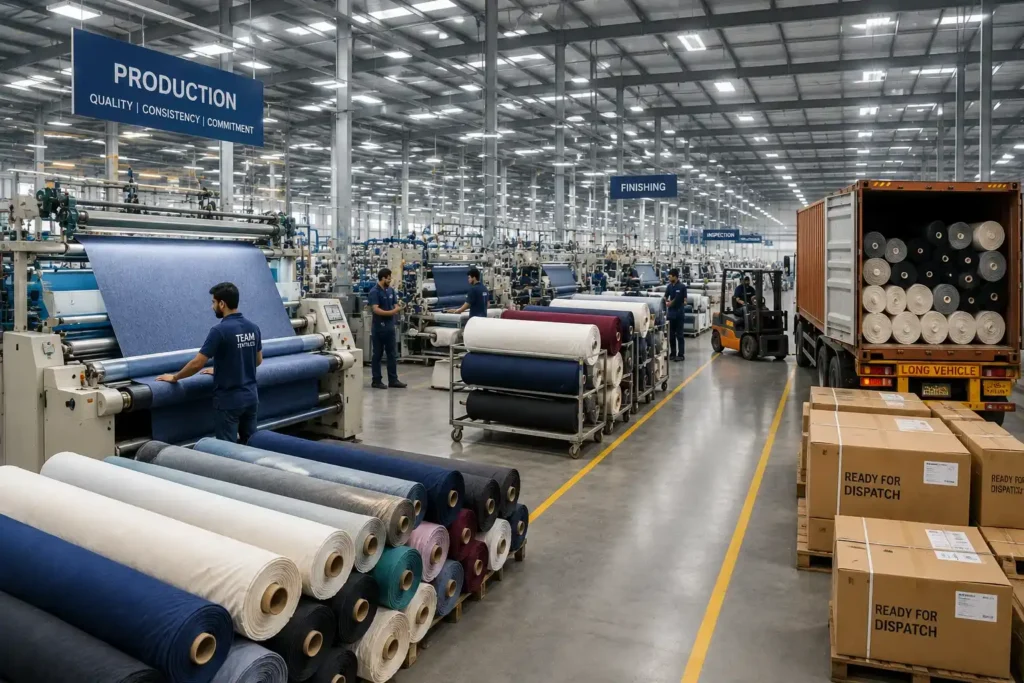
The most efficient partnerships in the fabric industry are ones where the manufacturer can handle multiple stages of your requirement, not just raw fabric supply. If you’re a fashion brand or designer, you want a partner who can offer custom fabric development, digital printing, and production consultation, all under one roof.
This matters because every additional vendor you work with introduces coordination overhead, potential quality inconsistency, and communication delays. When your RFD fabric supplier is also your digital printing partner, the handoff between stages is seamless, and the same team that knows your fabric spec is also managing the print application on it.
Ethiraj Fashion is built on exactly this model. From RFD fabric manufacturing to advanced digital textile printing to custom-made-to-order services, they provide end-to-end support for designers and brands who value precision and consistency. Their in-house creative team can also collaborate on design development, making them especially valuable for brands that want to translate creative concepts directly into finished fabric.
Step 6:Location Matters, Why Surat Is India's Fabric Capital
For businesses sourcing from India, the geographic location of your manufacturer carries real strategic weight. Surat, in Gujarat, is home to the largest textile manufacturing cluster in Asia, producing roughly 40% of India’s total synthetic fabric output and a dominant share of digital printed fabric supply globally.
Working with a fabric manufacturer in Surat gives you access to world-class textile infrastructure, competitive pricing driven by concentration of raw material suppliers, and logistics networks that have been built specifically for the textile trade. Surat-based manufacturers also have deep familiarity with global export requirements, making them reliable partners for international buyers.
Ethiraj Fashion operates from Surat with a pan-India and global supply network, giving clients access to the full advantages of this ecosystem, competitive bulk pricing, a wide material range, and experienced logistics management across both domestic and export channels.
Step 7: Always Sample Before You Commit
No matter how impressive a manufacturer’s portfolio looks or how glowing their client references are, never skip the sampling stage. Sampling is your only real opportunity to verify that what they claim on paper translates into the actual material you receive.
Request fabric samples across different product types and, if relevant, across different colour or print variations. When you receive samples, test them properly. Check the drape, the hand feel, the weight consistency, and the colour accuracy if printing is involved. Wash test the fabric to evaluate shrinkage and colour retention. Run the sample through your actual production process if possible.
A manufacturer who is confident in their quality will welcome this process. One who tries to discourage sampling, rush you past it, or charge excessive sample fees for standard swatches should be approached with caution.

Red Flags That Should Make You Walk Away
Experience in the textile industry reveals certain warning signs that experienced buyers learn to recognise quickly. Be cautious of any manufacturer who cannot provide clear batch records or quality test documentation, who gives vague answers about lead times or blames delays on external factors habitually, or who has no established process for handling defective goods or reorders.
Also, be wary of manufacturers who are unwilling to visit or allow an audit of their facility, who don’t offer any form of after-sales support once the fabric is dispatched, and those who seem to be operating as a trading intermediary rather than an actual manufacturer. These “middlemen” often increase your costs while reducing your quality visibility.
Why Fashion Brands and Designers Trust Ethiraj Fashion
Ethiraj Fashion was founded with a single-minded focus: to give fashion brands, designers, and bulk buyers access to premium-quality fabric with the kind of reliability and service that the industry rarely delivers. Based in Surat, India’s textile heartland, and backed by over a decade of manufacturing expertise, they’ve built a reputation that speaks through results.
Their product range covers viscose, polyester, and cotton fabrics in both RFD and digitally printed formats. Whether you’re sourcing base fabric for garment production, looking for vibrant custom-printed textiles, or need a manufacturing partner who can execute make-to-order briefs at scale, Ethiraj Fashion brings the infrastructure, expertise, and service culture to match.
What sets them apart from many manufacturers in this segment is not just the product, but the partnership mindset. Their team works closely with clients across D2C fashion brands, boutique designers, export houses, and corporate apparel buyers to understand specific requirements and deliver solutions that fit both the design vision and the business reality. Strict quality control standards, transparent communication, and consistent on-time delivery are the pillars on which this reputation is built.
If you’re ready to work with a fabric manufacturer who treats your brand’s growth as our own priority, Ethiraj Fashion is worth a conversation. Reach out to our team today to discuss your requirements, request samples, or explore a bulk partnership.
Frequently Asked Questions
A fabric mill produces raw, greige cloth from yarn or fibres. A fabric manufacturer takes that base material further, dyeing, finishing, printing, and processing it into the fabric that goes into your final garment. Some manufacturers, like Ethiraj Fashion, control multiple stages of this process in-house.
RFD stands for Ready for Dyeing. It refers to fabric that has been pre-treated to remove impurities, making it uniformly absorbent and prepared to receive dye or digital print. The quality of RFD fabric directly affects the consistency and vibrancy of your final printed or dyed fabric.
Request detailed samples and have them independently tested. Ask for batch consistency records and quality certifications. Check references from clients in your industry. Video calls and virtual tours can also give you meaningful visibility into their operations.
MOQs vary widely by manufacturer and product type. For standard RFD fabrics, many Indian manufacturers work with MOQs from 500 metres onwards. For custom prints or specialty developments, MOQs may be higher per design or colorway. Always clarify the full MOQ structure, including per-colour and per-design minimums, before committing.